

































Board and Batten Siding: Materials, Cost and Installation
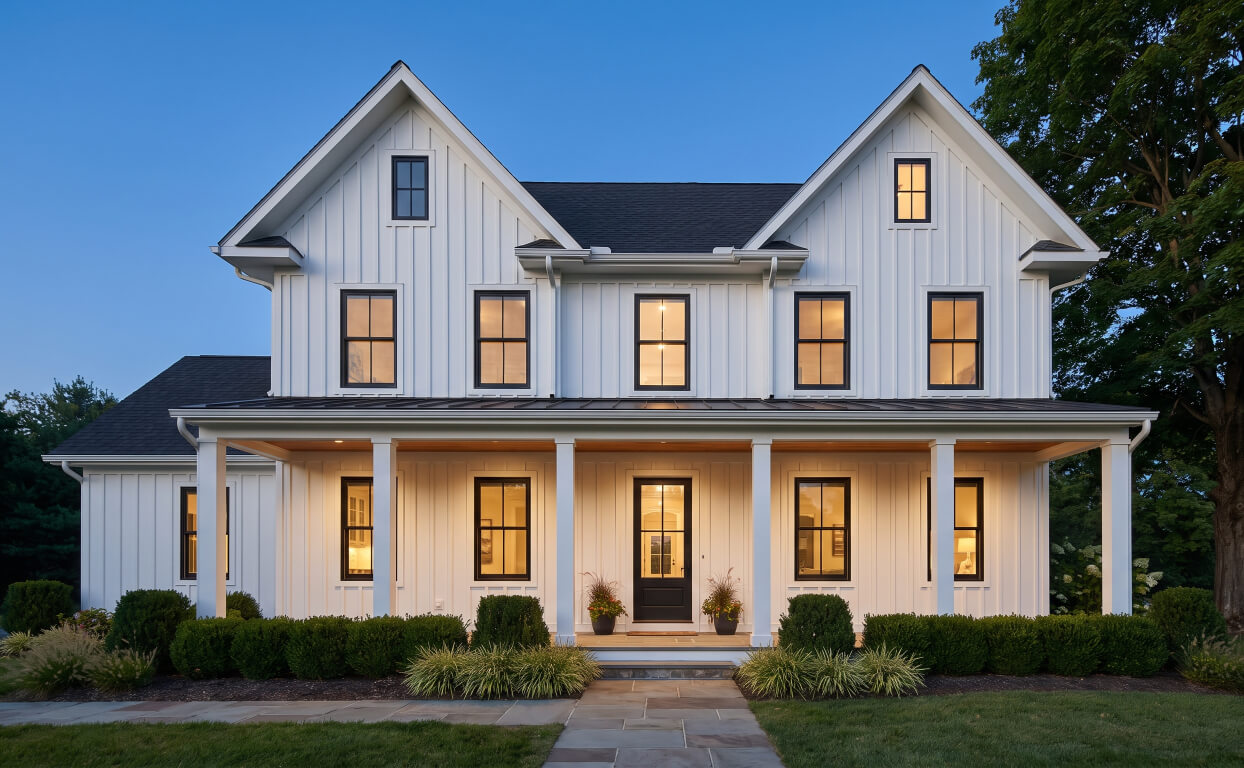
Board and batten is a look, not a product. Four materials can produce it, and they do not cost the same.
Name the material before you compare quotes. Until then every number you get is noise.

Wehrung's
August 25, 2026
0
min read
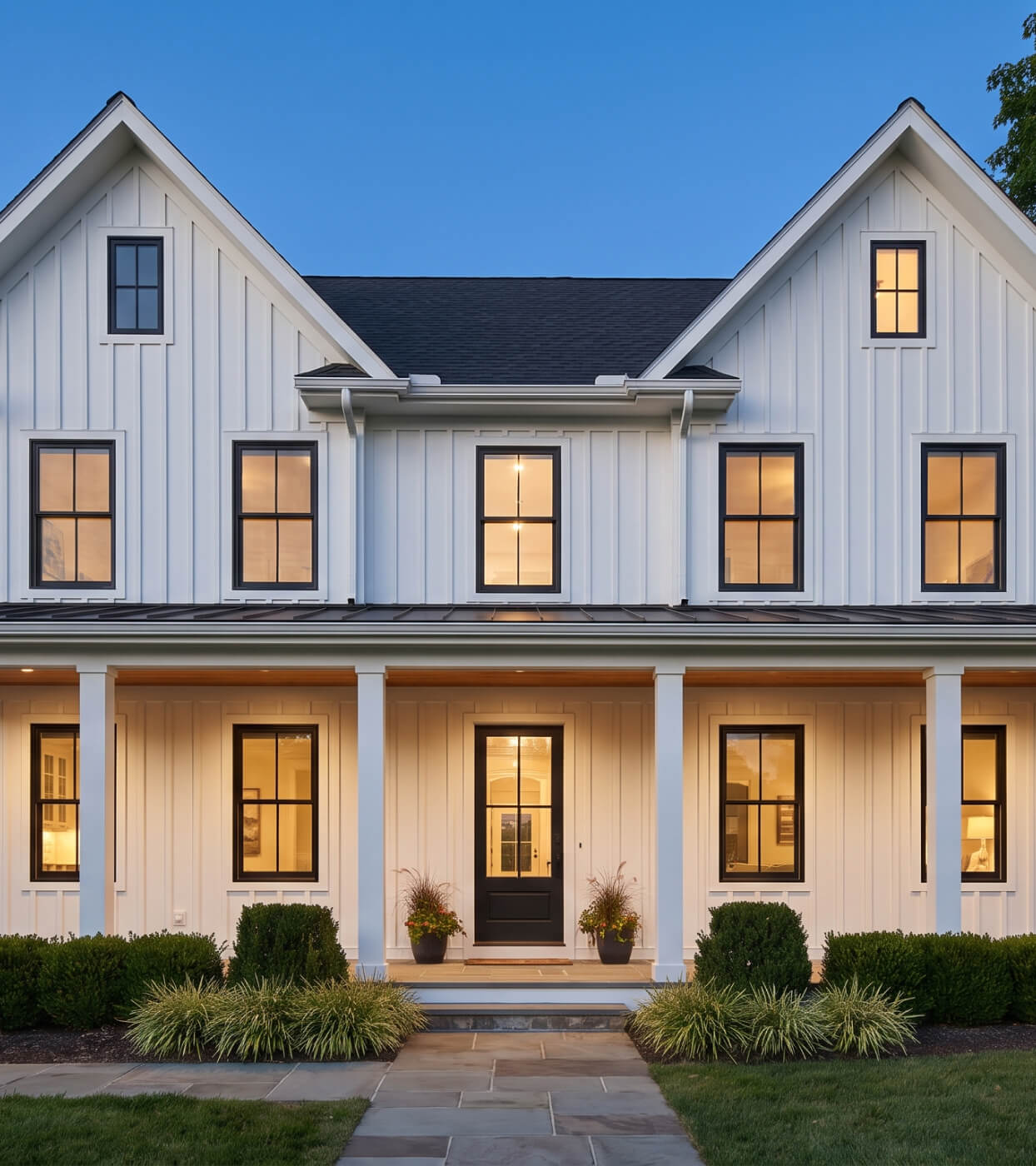
You saw it on a farmhouse somewhere between Doylestown and Quakertown. Clean vertical lines, deep shadow between the boards, probably white or a soft black. You went home, looked at your own horizontal vinyl, and decided it was time.
Then you started pricing it. One contractor quotes a number that sounds like a kitchen remodel. The next one is almost half. An online siding calculator spits out a materials figure that matches neither. Nobody tells you they are not bidding the same product.
Until you name cedar, engineered wood, fiber cement, or vinyl, you are comparing four different walls. That is why the numbers will not settle.
Spacing is the decision most people skip
The idea is simple. Wide vertical boards, narrow strips covering the seams. It started on barns because it was the cheapest way to close the gaps in rough-sawn planks and still shed water.
On a house, spacing is what makes it look like a choice instead of a leftover. Battens at 12 inches read tight and a little formal, closer to Craftsman than to a dairy barn. Push them to 16 or 20 and the wall relaxes. Past that, you have vertical siding with a stick glued on.
Most people never pick a number. They take whatever the installer defaults to, which is usually whatever the product ships in. Vinyl is the extreme case. The batten is molded into the panel, so the spacing is already decided at the factory. If you wanted 16-inch centers and bought vinyl, you did not get a vote.
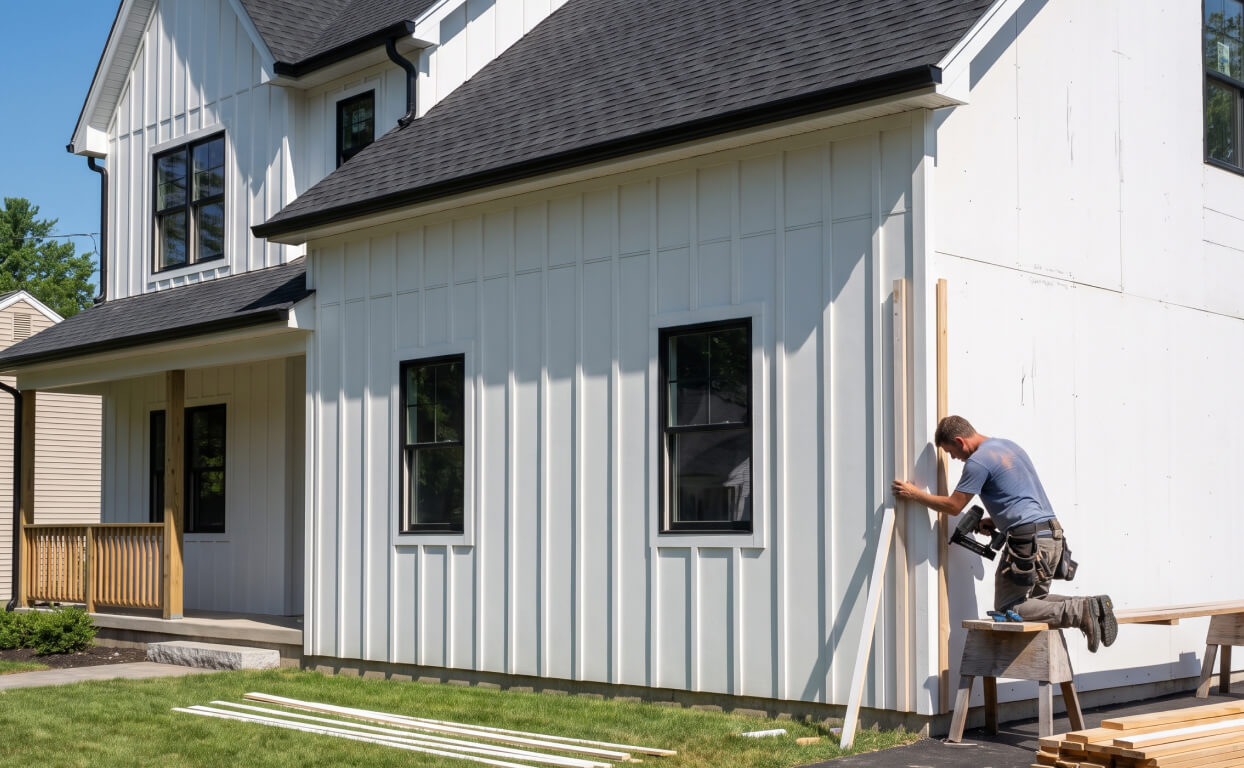
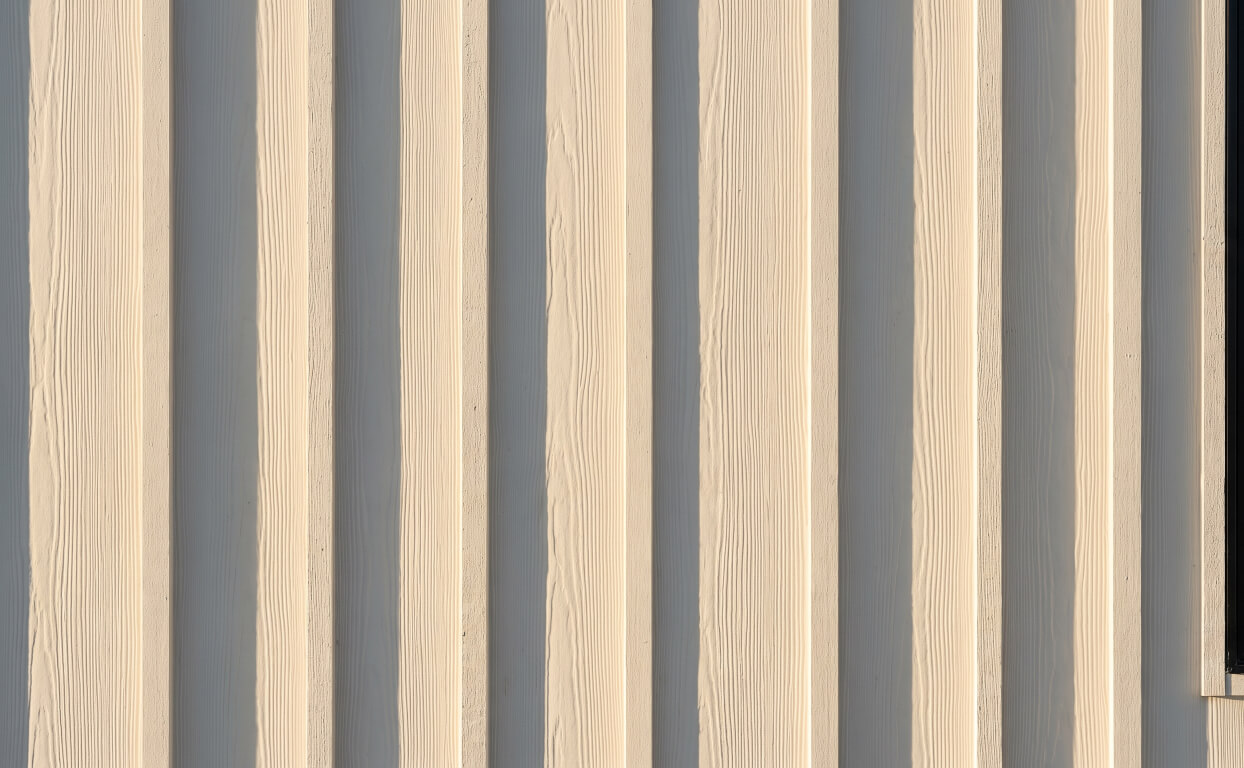
Shadow is the other half. A real batten has thickness. Late afternoon light hits that edge and the wall gets lines. A thin profile molded into a flat panel is a drawing of the same idea. Fine on a back gable twenty feet up. A disappointment on the wall you walk past to the front door.
Pick the spacing, and how much shadow you want, before you pick the material. On some products those two choices disappear the moment you order.
Four materials, four different jobs
Every board and batten quote in this county is one of these. The differences are not a matter of taste.
Ask one question against that table. Is this a wall you will look at, or a wall that faces the neighbor's garage?
Vinyl on a rear elevation is a perfectly decent decision. The same product across a front porch is how people end up unhappy with a wall that did not fail. They wanted the shadow and bought the drawing.
Mixing materials is more common than most homeowners think, and almost no contractor will suggest it first. Wood or fiber cement on the elevations you live with. Vinyl where you do not. You have to bring it up. Once you do, the quotes start to make sense, because each bidder is pricing a real combination instead of a fantasy of all-cedar on a ranch that did not budget for all-cedar.
Factory finish versus paint on site is the other fork that shows up too late. A pre-finished board arrives in the color with a factory coating. You touch up cut ends and fastener heads. Field painting is cheaper on day one and gives you any color, including one you change later. You are also trading a controlled coating for two coats applied outdoors in Pennsylvania weather. On engineered wood and fiber cement, the factory finish is usually the better long-term buy. On cedar, a stain done on site can be the whole point.
Why two quotes for the same house are never the same
The boards are not what moves the number. Three things do, and none of them is on a siding calculator.
Tear-off is labor, a dumpster, and a gamble. On houses around here built before the 1980s, the wall behind the siding is unknown until it is open. Rot at the window sills. No sheathing. Old board sheathing with gaps. Housewrap that has been toast for twenty years. A bid that assumes a clean substrate and a bid that carries repair time will never land near each other. The cheaper one is not the smarter one. It is the one that has not opened the wall yet.
Vertical siding wants horizontal furring behind it so water can drain and the wall can dry. Skip the rain screen and you have built a moisture trap. Include it and you have added a layer of material and at least a day of labor. Ask every bidder, in writing, whether their number includes it. If one does and one does not, you do not have two prices. You have two different walls.
Then trim. Every window, door, gable, and corner is a detail that has to be resolved, including how the corner boards meet the battens so the spacing does not die at the edge. A simple rectangular ranch and a house with three gables, a bay, and a wraparound porch can share a square-footage number and still be different jobs. If a quote is a round per-square figure with no openings called out, it is not a quote yet.
On vinyl, the trim question is different again. You are not wrapping a board. You are running J-channel, corner posts, and around-window kits that have to match the panel color, because you cannot paint your way out of a mismatch later. On wood and fiber cement, the corner board is a piece of trim you choose. On vinyl it is a system. Mixing a fiber-cement field with vinyl corners is how a wall starts to look like two projects.
Before you accept any number, ask four things and write down the answers. What material, by product name, not just board and batten. Does the price include tear-off and disposal. Does it include a rain screen. How are openings and corners handled, and is flashing at the roof-to-wall line in the bid. If one contractor says yes to all four and another says that is extra, you already know why the prices diverged.
We are not going to print a national average. A number pulled off the internet is worse than no number. What a yard can tell you is what your material costs today, in your quantity, delivered to your address. That figure moves with the market. The labor figure moves with what is behind the wall.
Wood in this climate moves. A cedar wall installed tight against a freeze-and-thaw winter will tell you about it in July. Engineered and fiber cement move less, which is why their gap spec is still not optional and also why they forgive a slightly less perfect installer. Vinyl expands on a hot south wall more than people expect. That is a manufacturer detail, not a personality trait of cheap siding. Follow the spec for the product you bought, not the spec for the product you wish you had bought.
The install itself goes wrong in boring places. Get the wall dry and flat first: housewrap, flashing at every opening, sheathing repairs before a single board. Furring horizontal, behind vertical boards. Start from a true plumb line, not from the corner of the house, because houses are not square and the error will land somewhere you can see it. Leave the gaps the manufacturer calls for. A wall installed tight in February will buckle in July. Battens last, fastened through the board seam into framing, not just into the face. Seal every cut end on engineered and fiber cement. The factory finish covers the factory edges only.
None of that is exotic. All of it is where callbacks come from.
If you are hanging this yourself, skill is not the constraint. A two-story wall is a scaffolding and second-person job. Fiber cement on a gable, alone, is unsafe. Come in with measurements and photos of each elevation. We will run the quantity, tell you what the spacing does to that number, and point at the detail on your house that is going to eat time. Ottsville, Collegeville, and Macungie all carry lumber and building materials. Chalfont does not, so do not drive there for this.
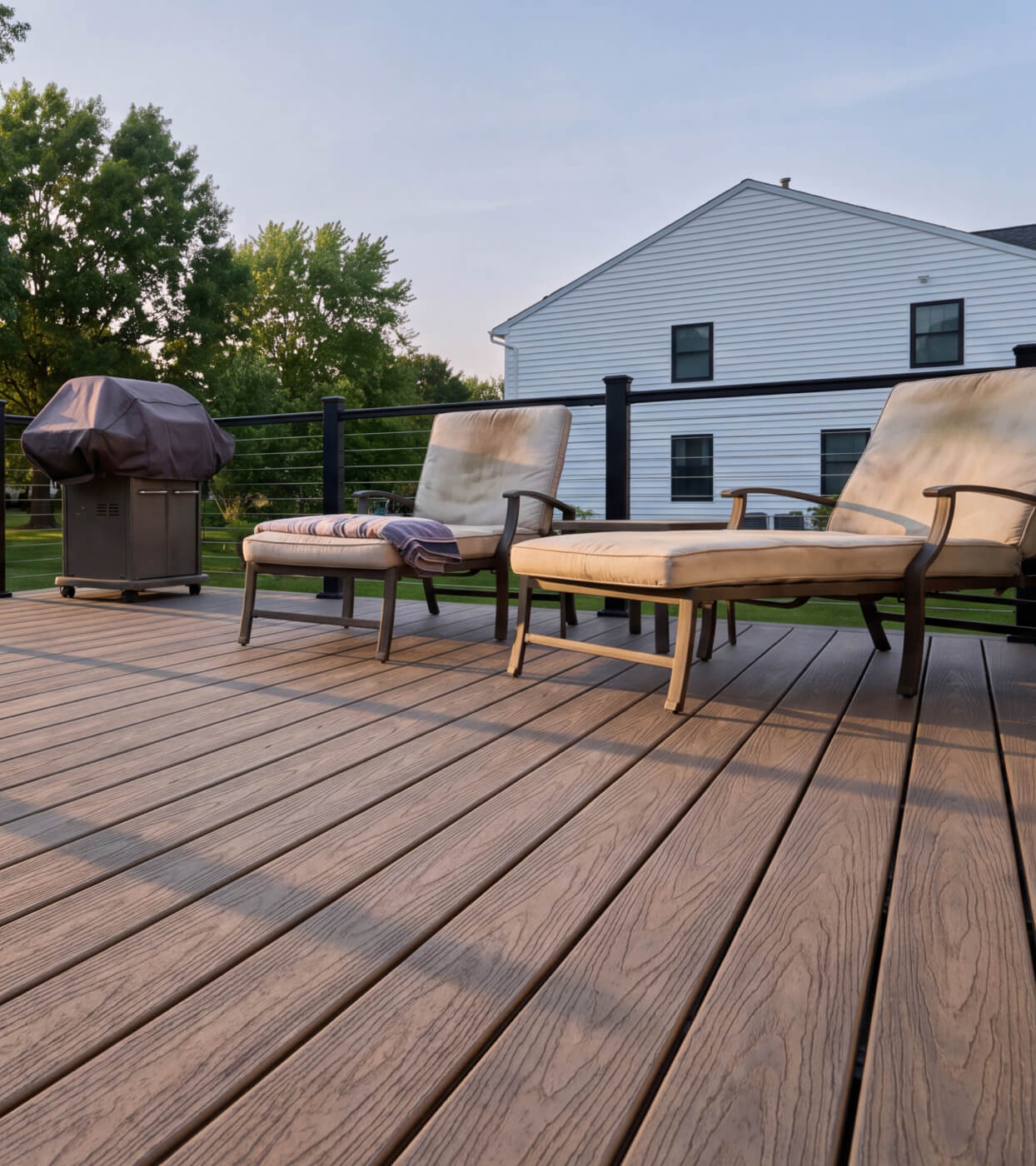
Name the material before anyone hands you a price. That is the whole job. If the project also includes a deck, Trex is the same kind of problem: one look, several products, and the quote is unreadable until you pick a line.
Get a quote on your siding
Bring your measurements and elevation photos. We will tell you what the job actually takes in the material you want.
.jpg)