































Trex: Which product fits your deck the best
Six Trex lines, and the cheap one is not a smaller version of the expensive one.
Read the profile. Take a sample home. Then count the clips, because those move the number more than stepping up a tier.

Wehrung's
August 29, 2026
0
min read
You have decided on Trex. Good. That was the easy part.
Now you are holding six lines of sample chips and they all feel like the same board. Someone says the difference is the cap and the color range. True. Also useless, standing in a showroom in March.
The gap between the cheapest board and the most expensive one is not a small upgrade. It is a different product. Here is how to tell which one belongs on your deck, and which line items in a quote are pretending to be the same job.
The board is not the upgrade. The profile is.
Trex sells across four tiers. Read the profile, not the marketing name.
Enhance is scalloped, and that matters more than the price tag. Channels molded into the underside mean less material, a lighter carry, a lower invoice. It also means the board is not solid through. On a small ground-level deck, nobody will notice. On a large raised deck with people walking the length of it, some homeowners do. The feel underfoot changes. So does how the board behaves if someone tries to stretch the joist spacing.
Refuge sits in the good tier on price and is not a downgrade. It is a different material. If flame resistance is on your list, ask for it by name. A salesperson walking you up the composite ladder will miss the point.
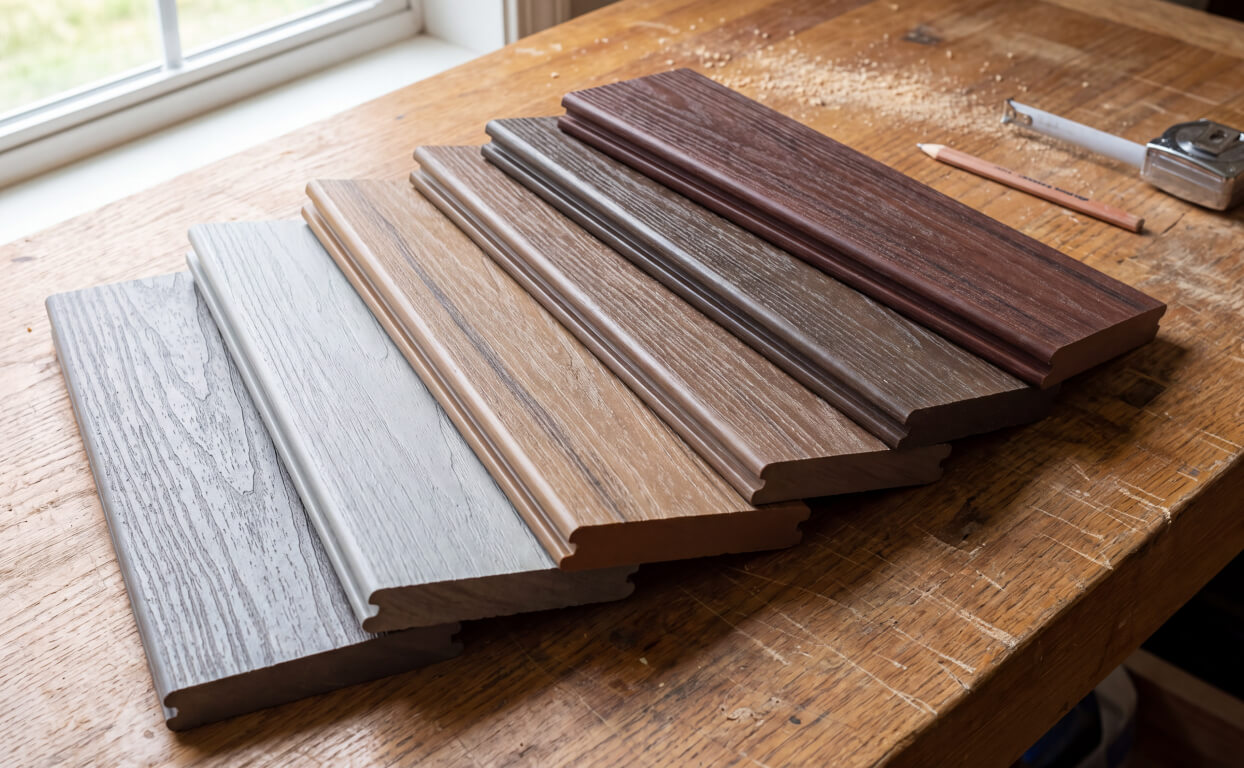
For most people building a normal raised deck, Select is the right buy. Narrower color range than the tiers above it. No meaningful performance penalty at that level. Put the money you did not spend on Transcend into the frame or the railing. Those are the pieces that fail first when a budget gets spent entirely on the walking surface.
Step to Transcend when the deck is the view from the kitchen and you want the grain to carry it. Step to Transcend Lineage when heat is the problem, because that is the reason the line exists. Signature is for the person who wants the board to stop reading as composite. Enhance is for when the budget is the constraint, and only if you understand you are buying a scalloped board. A smaller deck in Select usually beats a bigger deck in Enhance. Pressure-treated pine is the thing Enhance is replacing, not Select.
Color is a temperature decision
Every dark deck board gets hot in July. That is physics. No cap changes it.
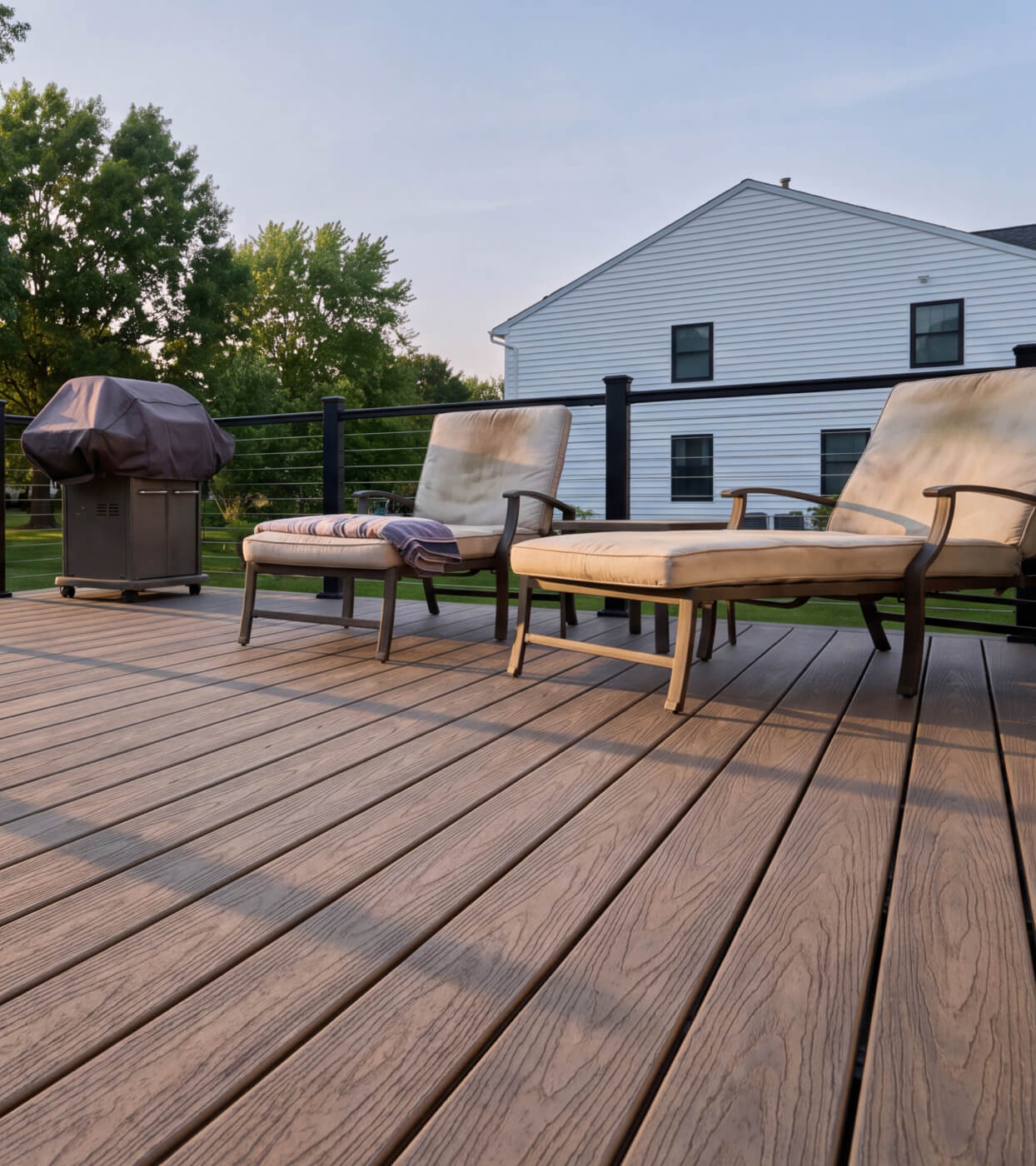
The variable you control is color, and it matters more in August than it does under showroom lights in March. A pale grey board and a dark brown board on the same south-facing afternoon are different things to stand on. If the deck is off a pool, or you have kids who go barefoot, or nothing shades the thing, choose for temperature first. You will still have colors left.
The names will not help you. Spiced Rum, Lava Rock, Havana Gold, Tiki Torch, Rope Swing, Biscayne, Island Mist. Pretty words. Zero information about how the board will look against your siding at four in the afternoon. Ignore the name. Look at the sample. Then take the sample home. A two-inch chip lies. Grain repeats, or does not, over a six-foot board in a way a chip cannot show, and the cap sheen shifts outdoors. If the store will let you walk out with a full offcut, take that instead of the fan deck.
Put it on the actual spot. Morning. Dusk. Wet, after you leave it out overnight. A board that looks perfect in the store can go dead, or go orange, against the house. That twenty minutes is the one regret no warranty covers: a deck you do not like the color of.
Handle the real board for texture too. Higher lines have deeper, more varied grain. That hides scratches. A multi-tonal board forgives dragged furniture and dog claws in a way a flat, uniform one does not. Over ten years that is worth more than the color you are agonizing over in the aisle.
Count the clips, the square-edge, and the frame
Nobody puts fasteners on the comparison chart. They move the number more than stepping up a tier.
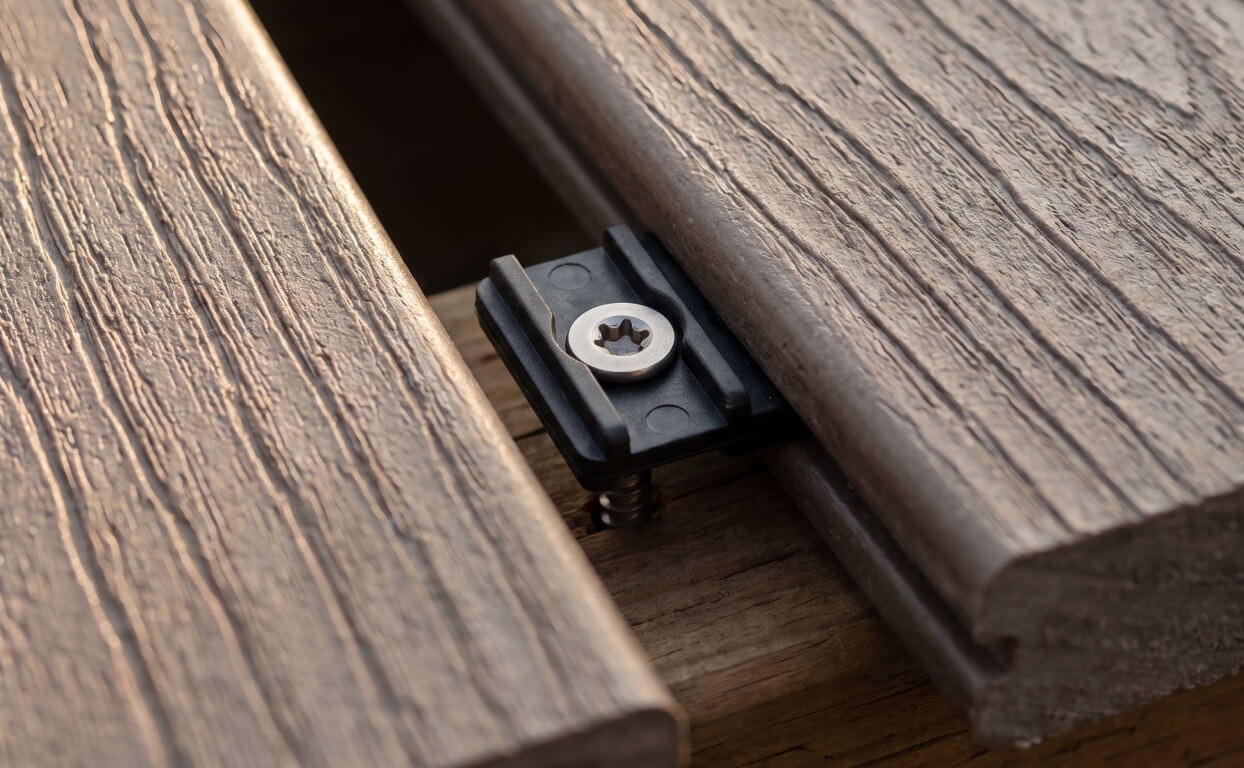
Grooved boards take a hidden clip. The Trex Hideaway universal clip is a glass-filled nylon piece with a stainless screw already in it. It seats in the groove between two boards and drives down into the joist from above, star bit, nobody lying under the frame. The clip sets a consistent quarter-inch gap, which is the spacing the boards want for drainage and movement. One box covers 50 square feet at 16 inches on center, 90 fasteners plus the bit. Across a whole deck that is a real line item.
The other option is a square-edge board face-screwed down. Faster. Cheaper. Completely sound. You will see the fastener heads for the life of the deck. Neither choice is wrong. A hidden-fastener quote and a face-screwed quote are not comparable even when the board is identical. If two bids look far apart, check this first.
Most decks use both profiles. Grooved boards across the field. Square-edge for the perimeter, stair treads, and any board that lands against the house. Picture-frame borders eat more square-edge than people count. Coming up short on Saturday is usually this, not a math error on the field.
Board length is the quiet one. Trex comes in standard lengths. Size the deck so the boards run wall to wall in one piece and you skip a row of butt joints down the middle. It often costs no more. It is free to solve on paper and impossible to fix once the boards are cut. Ten minutes at the counter with the dimensions, before anything is ordered.
Railing surprises people. On a lot of projects it lands closer to the cost of the decking than they expected, especially cable, glass, or aluminum instead of a matching composite system. Matching composite rail is the boring choice and often the right one, because the color is already decided and you are not introducing a second material that weathers on a different clock. Cable and glass look clean in a catalog and then eat the budget, plus they need a crew that has done them. Ask what the rail number includes: posts, infill, brackets, and labor. A rail-by-others line is how a cheap decking bid stays cheap.
No board saves a bad frame. Joist spacing has to match what the board requires. It tightens for diagonal or picture-frame layouts. Undersized or over-spaced joists give you bounce and a wavy surface that a premium board will not hide. More decks fail underfoot than on the walking surface. If you are covering an old pressure-treated frame, have someone check span, condition, and whether the joists are even close to flat before you buy a single board. Composite will telegraph a hump that pine would have hidden under stain.
Fascia is a different piece than the decking. So are the stair treads if you try to fake them with field boards. Get both on the list before you compare line prices, or you will be back for a second order while the crew is standing there.
Maintenance is the same across the lines, and it is the reason people leave wood. No sanding. No staining. No sealing. It still needs washing. Pollen, leaf tannin, and the green film that grows on anything shaded in a Pennsylvania spring will land on composite the same way they land on everything else outdoors. Hose, soft brush, the manufacturer's cleaner, once or twice a year. A Saturday morning. Not a project.
When two contractors bid the same deck and land far apart, they are rarely pricing the same job. Line, hidden vs face-screw, rail included or not, frame repairs, picture-frame yes or no. Ask them to list those five on paper. Then the numbers can be compared. Until then you are shopping stories, not boards.
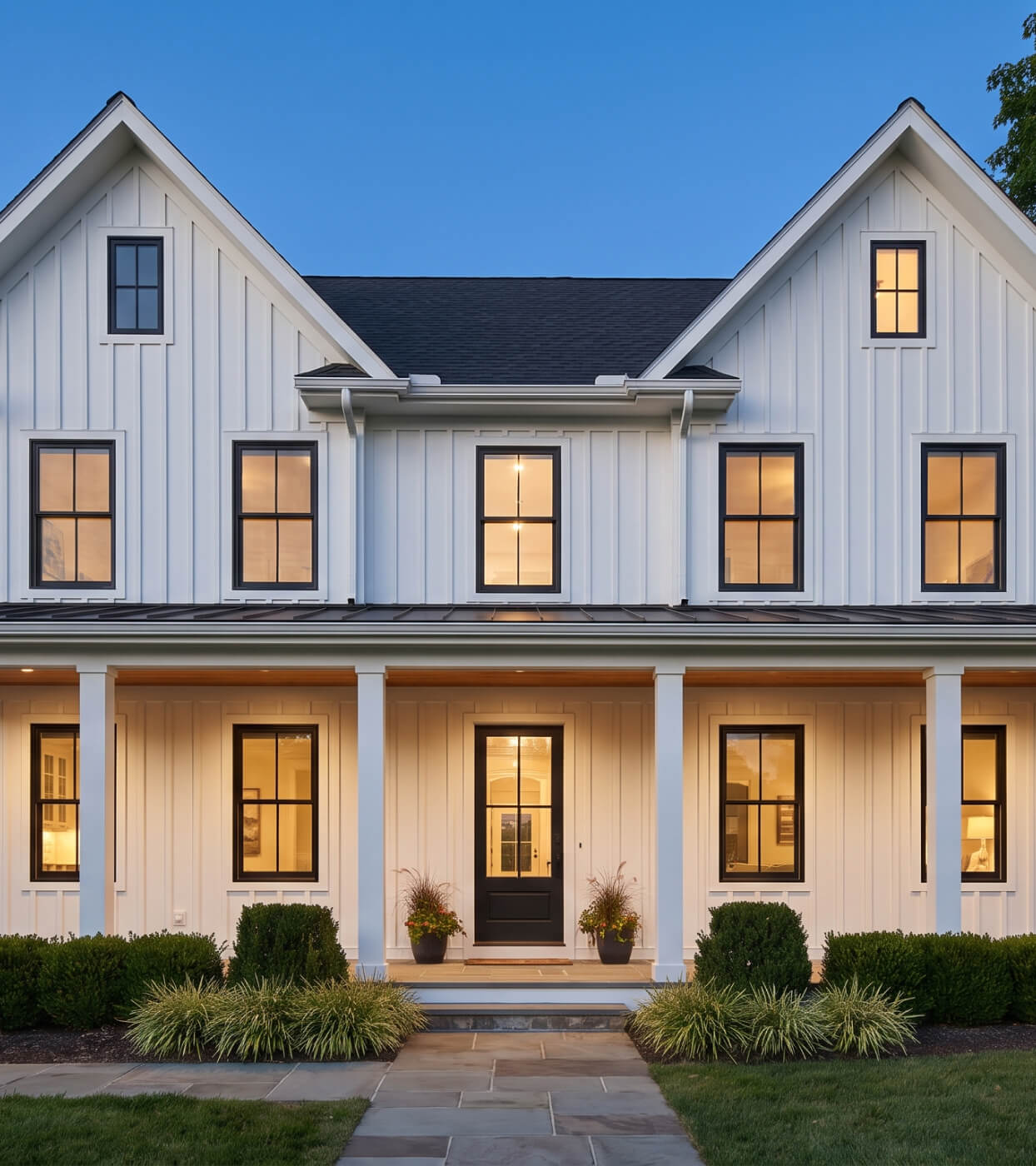
Bring the dimensions. We will run board count, fastener count, and the framing underneath, then price the lines on your deck instead of per square foot in the abstract. Color cards are not inventory. What is on the rack that week is the conversation. Decking is at Ottsville, Collegeville, and Macungie. Chalfont does not carry it, so check before you drive. If the house is getting new siding in the same season, start with which board and batten material you are actually buying. The color of the deck has to live next to that wall.
Price your deck, line by line
Bring the dimensions and we will work out the board count, the fasteners and the framing, then price the lines side by side.
.jpg)